
Searching for a Warrant in Montgomery County
The official online lead is Indiana MyCase. It searches public court cases, not a separate warrant roster. Select a Montgomery County court when that filter is available. Start with an exact cause number, citation number, or cross-reference number. A party-name search can work when no number is known, but common names, spelling variants, and the public system's record limit can cloud the result.
Open the public case summary and read the event history, case status, bond or financial fields, and any warrant or failure-to-appear notation. Record the cause number and court name before making a call. The Judicial Branch warns that MyCase is not the official record and can contain omissions or errors. A lawyer can advise how to respond if a live order appears; clerks may explain procedure but cannot give legal advice.
- Search MyCase with the exact cause, citation, or cross-reference number.
- Use a party name, Montgomery court, case type, status, and file dates when no number is known.
- Open the summary, note the court and event wording, and save the cause number.
- Call the Clerk or issuing court when the summary is absent, unclear, or incomplete.
- Ask the Sheriff/Jail for safe routing when an immediate status or surrender question remains.
Montgomery County Warrant Search Limits
The Indiana Judicial Branch warrant answer states both limits plainly. Warrant information may appear in a public criminal case summary unless confidential, yet Indiana offers no MyCase warrant-search feature and no public website that searches every arrest warrant statewide.
That distinction changes the task. Search for a known or likely court case, then inspect its events. Do not treat an empty result as a certificate that no warrant exists. A case may not be online, a warrant can be confidential, or the name query may not match. Montgomery County also has no official complete active-warrant database on the sheriff site. The sound result is often a documented lead that still needs court or sheriff confirmation.
The official MyCase overview shows the public-search context used in Montgomery County warrant research.
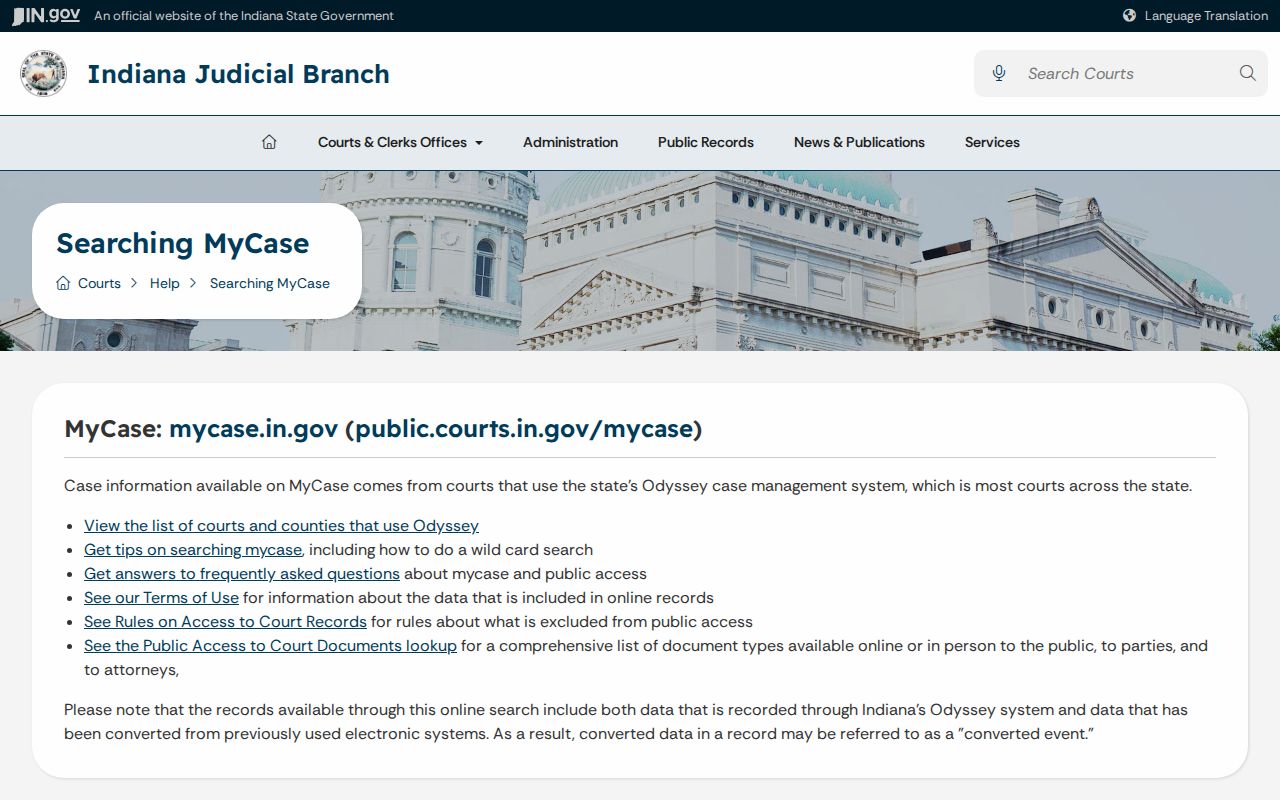
The image reinforces that the tool is a case-record service, so every warrant conclusion must stay tied to the case summary and its official custodian.
Warrant Search Fields Explained
MyCase supports several paths into a Montgomery County case. Exact identifiers are stronger than names. Court, case type, status, and dates help separate similar records. The sounds-like option and wildcard can help with spelling, while CAPTCHA and large-result limits may affect broad searches. Date of birth is not documented as a public MyCase field, so it should not be promised as one.
| Field Label | Type | Required | Notes |
|---|---|---|---|
| Case, citation, or cross-reference number | Text | No | Best route when the exact identifier is known |
| Party name | Text | No | Use first and last name; sounds-like and wildcard may help |
| Court | Selector | No | Narrow to Montgomery County courts when possible |
| Case type and status | Selector | No | Separates criminal, infraction, open, and closed cases |
| File-date range | Date range | No | Reduces broad results and common-name conflicts |
Filter Montgomery County Warrant Results
The current local assignment rules give each Montgomery County trial court a distinct role. Circuit Court handles murder and Level 1 through Level 5 felony assignments. Superior Court 1 handles Level 6 felony and specified alcohol cases. Superior Court 2 handles other misdemeanor matters. Those assignments offer a useful filter when a party search returns several cases.
Search tips matter most when a name is common. Add a first name, narrow the file dates, select a likely case type, and choose the Montgomery court. A closed status should not end the inquiry by itself because a past failure-to-appear event, financial duty, or other unresolved issue may still call for official confirmation. Match the cause number and court, not just the spelling of a name.
The Judicial Branch publishes MyCase search-field instructions for these filters and query modes.
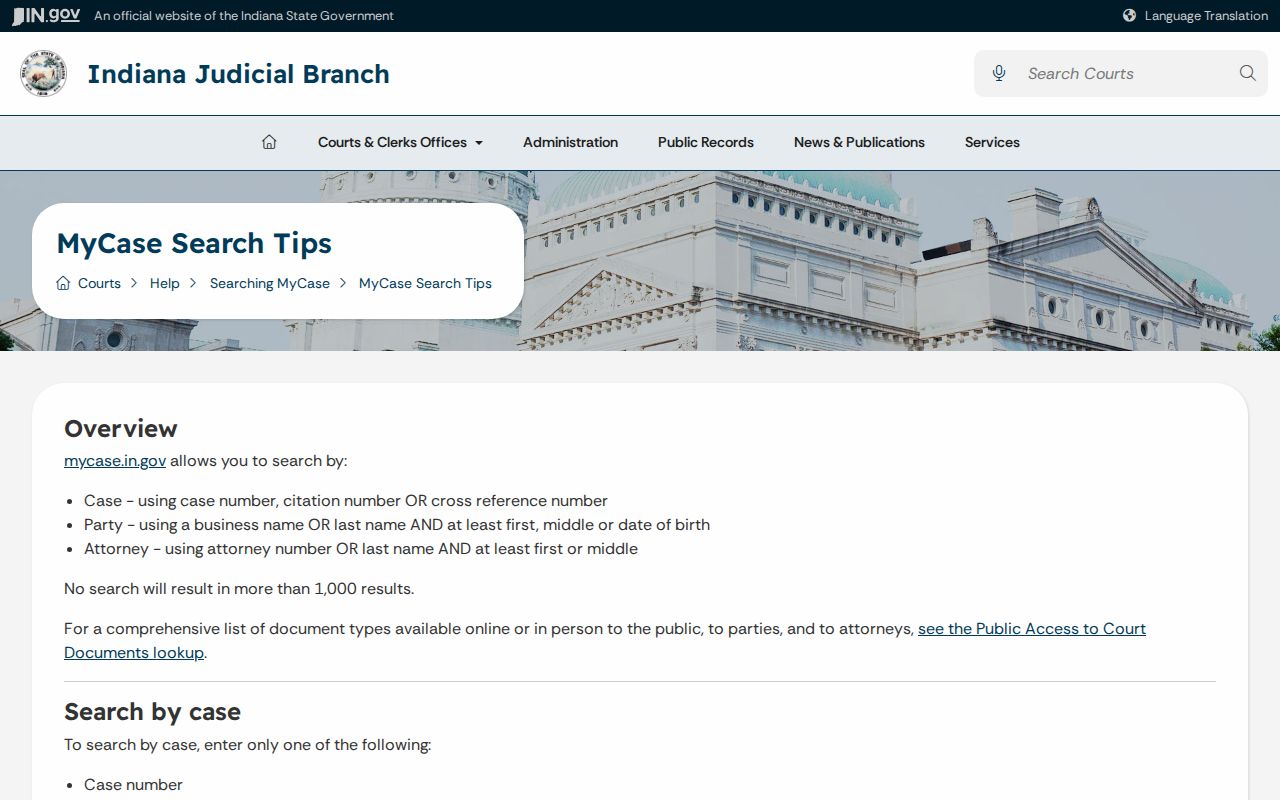
These controls help reduce false matches, but the issuing court remains the source for a current warrant decision.
What a Warrant Search Shows
A public Montgomery County case summary may show a short warrant event rather than the full signed instrument. A clerk-held order, case docket, sheriff return, booking record, and public display are separate records. Read the event in context with the court, cause number, charge, dates, and later entries that might show service, recall, quash, or another disposition.
| Cause Number | The case identifier, such as 54D02-26-CR-000000; use the actual number shown |
|---|---|
| Charge or Case Type | The alleged offense or case class linked to the proceeding |
| Issuing Court | Circuit Court, Superior Court 1, or Superior Court 2 as the record states |
| Bond Information | A shown amount or condition is not a guaranteed current release quote |
| Event or Status | Issuance, service, recall, quash, or another docket notation |
Zero Montgomery County Warrant Results
A zero-result search calls for a better query and then a different channel. Check the spelling. Try the exact cause or citation number. Remove an over-narrow date range. Use the sounds-like tool or wildcard, then select Montgomery County again. If the case should exist but does not appear, the public record may be restricted, sealed, expunged, newly filed, or simply unavailable online.
The Montgomery County Clerk is the official court-record custodian. The office at 100 East Main Street in Crawfordsville can route a request, and the Judicial Branch directory lists 765-364-6430. Ask for the court tied to the cause number and for any releasable record showing issuance, service, recall, quash, or status. For a sheriff-held record, use the Sheriff services route and the APRA email at dell.wilson@montgomerycounty.in.gov.
Note: A missing public result can reflect access limits or search mismatch, so it never proves that Montgomery County has issued no warrant.
Where to Check Warrants in Montgomery County
Each Montgomery County office answers a different part. MyCase provides the public case summary. The Clerk and issuing court control official court files and judicial status. The Sheriff holds law-enforcement records tied to service, arrest, transport, and booking. The jail can route immediate questions about surrender and custody, but its inmate finder is not a warrant lookup.
For a person-specific concern, the Sheriff/Jail publishes 765-362-3740. Call before traveling and ask which office can confirm the next step, required identification, booking arrangements, medication, bond options, transport, and attorney contact. Jail visitation hours are not surrender hours, and Montgomery County publishes no written universal surrender window. No public statewide all-warrant system fills that gap. Cases from outside the county must be traced to their own issuing court.
Request Montgomery County Warrant Records
Indiana's Access to Public Records Act governs sheriff-held records, while the Indiana Rules on Access to Court Records govern court material. A sound request identifies the custodian and describes a record with reasonable particularity. It should not demand an undifferentiated countywide list.
Useful language is: “Please identify any releasable public record showing the issuance, service, recall, quash, or current status of the warrant associated with cause number [number] during [date range]. If another office is the custodian, please identify that office.” Include the warrant type and court when known. The Sheriff may withhold confidential or investigatory material, and the Clerk must apply court-access rules. If an APRA response or denial remains unresolved, the Indiana Public Access Counselor offers guidance.
The Judicial Branch provides official guidance on choosing the court or law-enforcement records route.
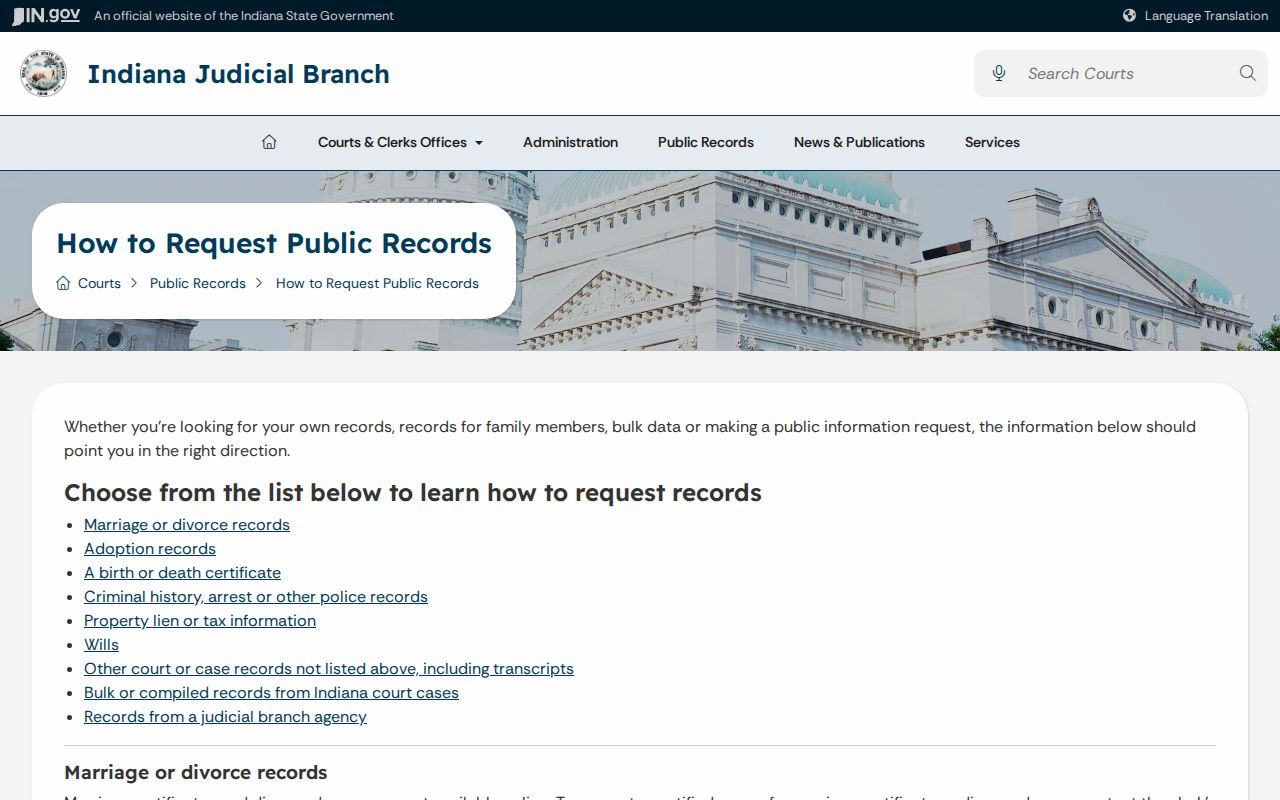
The distinction helps send a court order request to the Clerk and a service-record request to the Sheriff instead of mixing two custodians.
Best request: Name the cause number, record type, date range, and likely custodian so staff can locate a releasable Montgomery County record.
Montgomery County Tax Warrants Are Separate
The Sheriff services area links an Indiana tax-warrant portal, but that tool concerns tax collection. It does not search criminal arrest warrants, bench warrants, or failure-to-appear orders. A tax result cannot confirm a criminal warrant, and an empty tax search says nothing about a court case.
Keep the record type tied to its custodian. Criminal and infraction case events route through MyCase, the Montgomery County Clerk, the issuing court, and the Sheriff as needed. A tax-warrant payment route belongs to the tax process. Likewise, JailTracker is an inmate-finder interface, not a general warrant check, and AllPaid is a bond-payment vendor rather than a status database. These labels prevent a payment page from being mistaken for proof that a warrant exists or has been cleared.
Montgomery Restricted Warrant Access Rules
Public access is presumed, but it has firm limits. Indiana court-access rules exclude or restrict confidential, sealed, expunged, and protected material. Investigative process can receive special treatment, especially before service. APRA also allows or requires agencies to withhold protected law-enforcement details and personal identifiers. The public summary may therefore show less than the official court file or nothing at all.
Key Rules:
Sealed, confidential, expunged, and protected records may not appear in the public search.
Investigative warrant material and protected identifiers can be withheld under Indiana law and court rules.
Absence from MyCase or the curated sheriff page is not proof that no warrant exists.
When the record is restricted, ask only what procedure the office can disclose. A court may confirm where to direct a filing without releasing the warrant. Sheriff staff may give safe appearance instructions while withholding operational facts. That boundary protects lawful process and keeps a Montgomery County warrant lookup focused on official, current sources.