
Montgomery County Bench Warrants Explained
A bench warrant is court-issued process often tied to nonappearance or violation of an existing court order. Indiana pretrial material defines failure to appear as a nonappearance followed by a court warrant. In Montgomery County, the order may arise after a missed hearing or trial. Local rules also address failure to attend an ordered probation presentence appointment.
The trigger and remedy depend on the actual case. A criminal FTA, probation or community-corrections violation, traffic matter, and civil body attachment are not interchangeable. Each may carry a different hearing, hold, bond, or release path. Start with the cause number and event text. Avoid guessing from the word “bench” alone, and never assume a payment automatically withdraws the order.
Montgomery County Bench Warrant Workflow
A missed date changes the case from a scheduled appearance to a status controlled by a new court event. The docket may show an FTA notation or warrant issuance. The judge may set terms, and law enforcement can receive authority to bring the person before the court. A public MyCase summary may show only a short event, so the signed order or later docket entry may be needed to understand the present status.
Find the cause number in MyCase, record the court, and check for later entries. Then ask the Clerk which office handles an FTA status question and whether a judge has recalled, modified, or continued the warrant. Staff can describe filing and calendar procedure but cannot recommend a defense. Counsel can assess whether to seek a hearing, file a motion, arrange surrender, or address the missed obligation first.
How Montgomery County Bench Warrants Are Issued
The judge acts within the underlying case after the court finds that an ordered obligation was missed. The warrant directs law enforcement to take the person before the court under the stated terms. The case docket records the chronology. The Clerk maintains the court file, while the Sheriff may keep the service or custody record.
Indiana has no public all-warrant database. MyCase can show warrant information in a public criminal case summary unless it is confidential, but it has no warrant-only search. After issuance, the warrant remains subject to the issuing court's orders. Service, recall, quash, modification, or another disposition must be confirmed from current records. A search result from days or weeks earlier cannot establish what the judge has since done.
The Indiana pretrial definitions are the official source for failure-to-appear and bail terms.
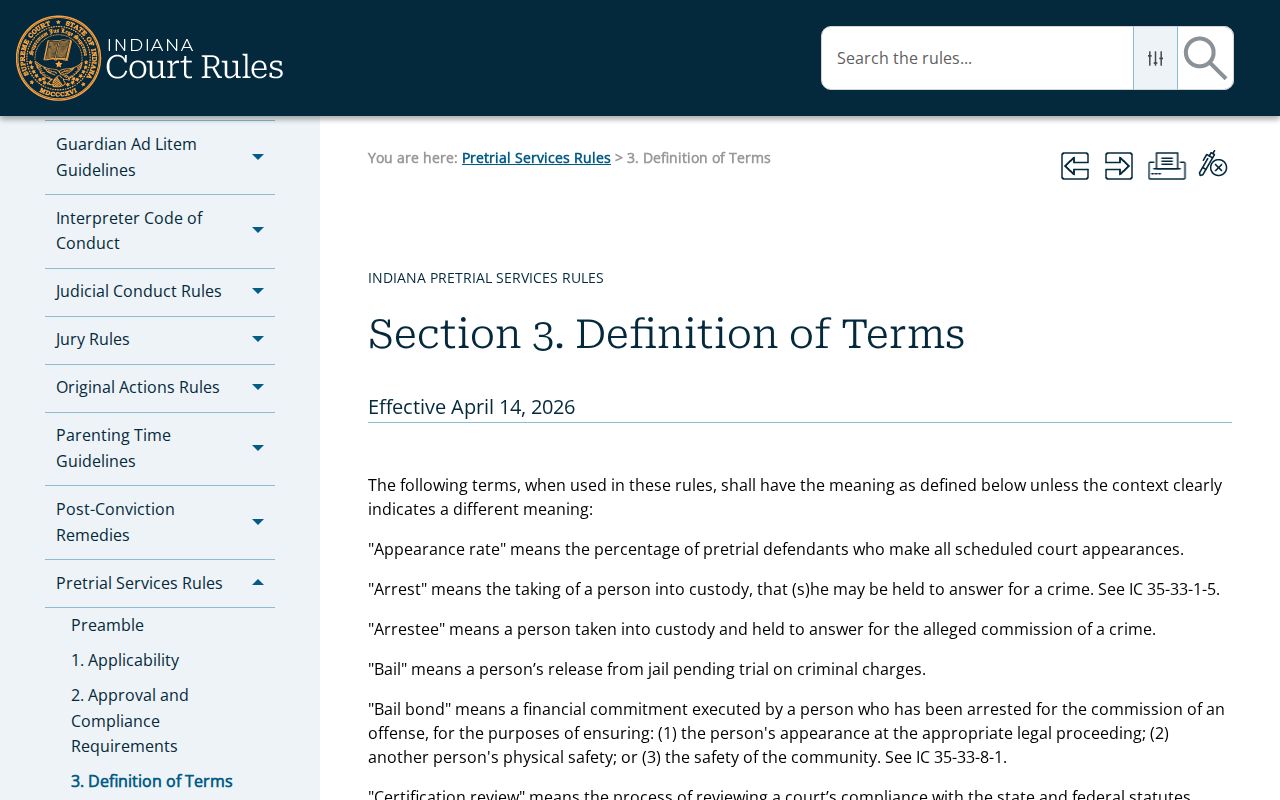
The state definition supplies the framework, while Montgomery County local rules govern local release and assignment details.
Montgomery County Bench Warrant Release
Montgomery County local rules make judicial control central. A defendant who fails to appear for a hearing or trial, or who misses an ordered probation presentence appointment, is not released without a court order. A probation or community-corrections violation is held for 15 days and also cannot be released without a court order. These are local rules, not a promise that every case receives the same result.
That limit is why a clerk call, generic payment page, or jail visit cannot by itself clear a bench warrant. Ask whether a judge must approve release, whether another hold applies, and whether counsel should seek a hearing. The local bond schedule may inform a case, but a judge can set a different amount or condition. Status and release terms must come from the actual order.
Local rule: Key Montgomery County FTA and violation releases require court action, so confirm the judge's current order before planning surrender or bond.
Bench Warrants and Arrest Warrants Compared
Both are judicial orders enforced by law enforcement, yet the starting points differ. A bench warrant commonly follows a failure within an existing case. An arrest warrant under Indiana Code 35-33-2 follows an indictment or a judicial probable-cause finding. The precise order controls, so the labels below are a route to the right question rather than a prediction of outcome.
| Feature | Bench Warrant | Arrest Warrant |
|---|---|---|
| Trigger | Nonappearance or violation of a court order | Indictment or judicial probable-cause finding |
| Issuance | Judge acts in the existing court matter | Written judicial warrant under Indiana law |
| Case Context | Usually tied to a pending or prior duty | Tied to an alleged criminal offense |
| Resolution | Appearance, service, recall, quash, or other order | Surrender, arrest, bond, and court process as ordered |
Montgomery County Bench Warrant Status
The status vocabulary prevents a major error. Issued means the court authorized the process. Served or executed records that law enforcement acted on it. Recalled or quashed means the court withdrew or set aside the warrant according to its own order. A return of service records what an officer did. Active or outstanding usually means no closing action is shown, but public labels can vary.
- Cause number
- The court's case identifier and best link across MyCase, the Clerk, court, and Sheriff.
- Warrant event
- A docket notation about issuance or later action, not always the full signed warrant.
- Recall or quash
- Court action that withdraws or sets aside process; use the exact order language.
- Return
- The record of service, arrest, inability to locate, or another official result.
Ask for a specific status and its date. “Is there a warrant?” may yield less useful routing than “Does the latest releasable record show this warrant as issued, served, recalled, or quashed?”
Resolving a Montgomery County Bench Warrant
The safe route begins with identity and status, not an unplanned trip. Locate the case, verify the court, and consult counsel when possible. Ask whether the court requires a motion, hearing, surrender, bond, or another act. No official Montgomery County source promises a walk-in recall docket or a universal surrender period.
- Confirm the cause number, warrant event, and issuing Montgomery County court.
- Consult an attorney about a hearing or motion to recall or quash.
- Call the proper court and Sheriff/Jail for safe appearance or surrender instructions.
- Address the missed hearing, payment, probation appointment, or other underlying duty.
- Obtain the official order and confirm the sheriff record has been updated.
Caution: Do not ignore a Montgomery County bench warrant; get legal advice and official instructions before travel, payment, or surrender.
Call Before Montgomery County Warrant Surrender
The Montgomery County Sheriff/Jail publishes 765-362-3740 for the local office. A person-specific call should seek routing and safe instructions, not demand confidential facts. Ask which office controls the matter, whether the person must contact the court first, and what identification is required. Also ask about booking timing, transportation, medication, attorney contact, bond options, and any hold.
The jail's visitation schedule is not a surrender schedule. No official written surrender window was found. Do not arrive based only on an internet event or a third-party claim. When an emergency exists, call 911. For a routine warrant-status question, use the published non-emergency and court channels.
The Montgomery County Sheriff website shows the agency's official contact and service context.

The agency page is a starting point for contact, not a complete public bench-warrant search.
Finding the Court That Issued the Warrant
Montgomery County has Circuit Court, Superior Court 1, and Superior Court 2. The current Indiana Judicial Branch directory did not identify a separate municipal court for Crawfordsville, Ladoga, Waynetown, Darlington, or Linden. Do not route a city resident to a town court that does not exist. The underlying cause number determines the court.
Circuit Court receives murder and Level 1 through Level 5 felony assignments. Superior Court 1 receives Level 6 felony and specified alcohol matters. Superior Court 2 receives other misdemeanor matters. Crawfordsville ordinance traffic matters also route through Superior Court 2 under the official ordinance material. Assignment rules help narrow a search but do not replace the docket.
The Judicial Branch Montgomery County court page is the official local-court route.
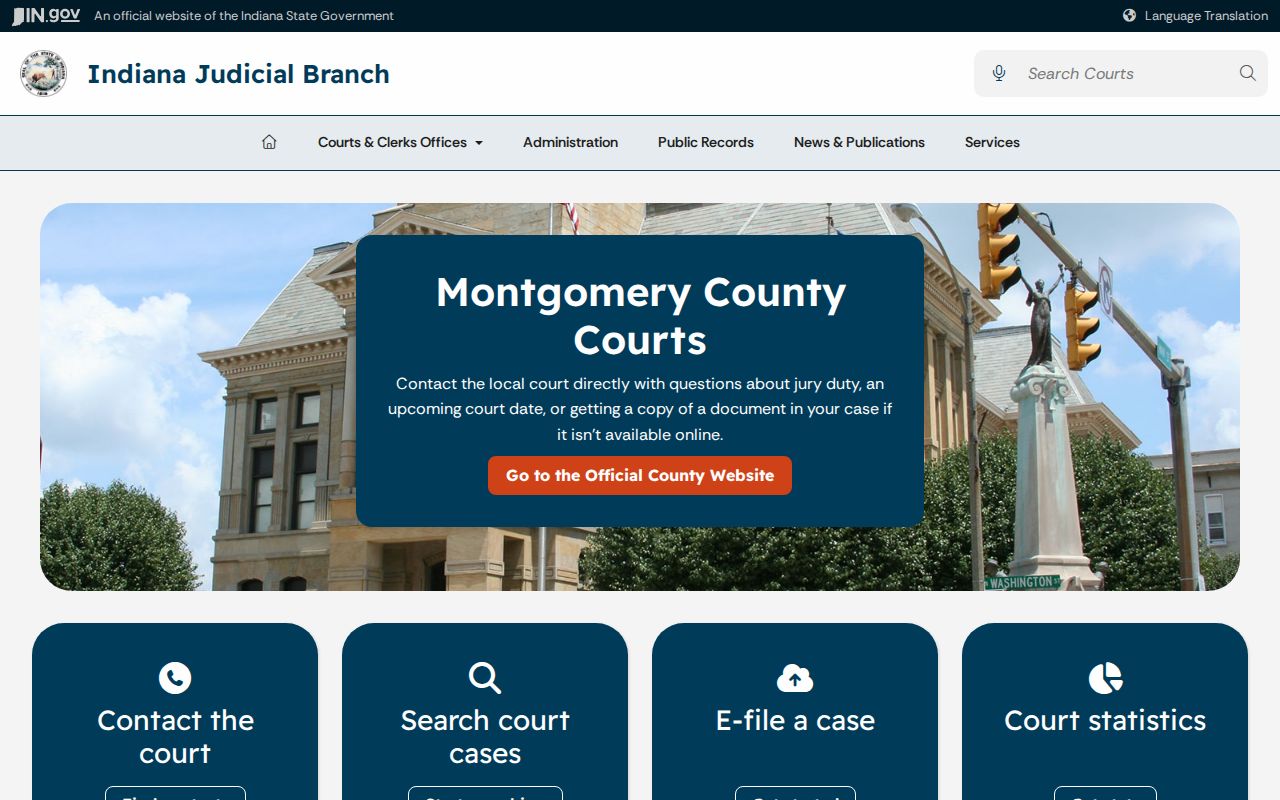
The court page leads to MyCase and local court material, which help connect the warrant event to the judge who controls it.
Montgomery County Civil Bench Warrants
A civil body attachment can also follow failure to appear after a rule-to-show-cause process. Indiana Trial Rule 64 allows a writ of attachment, bench warrant, or body attachment in that setting. It is civil process and should not be merged with a criminal arrest warrant. The cause type and issuing order govern the remedy.
The official Trial Rule 64 provides the civil procedure, including presentment to the issuing court or judicial officer within the rule's stated period, excluding weekends and holidays.
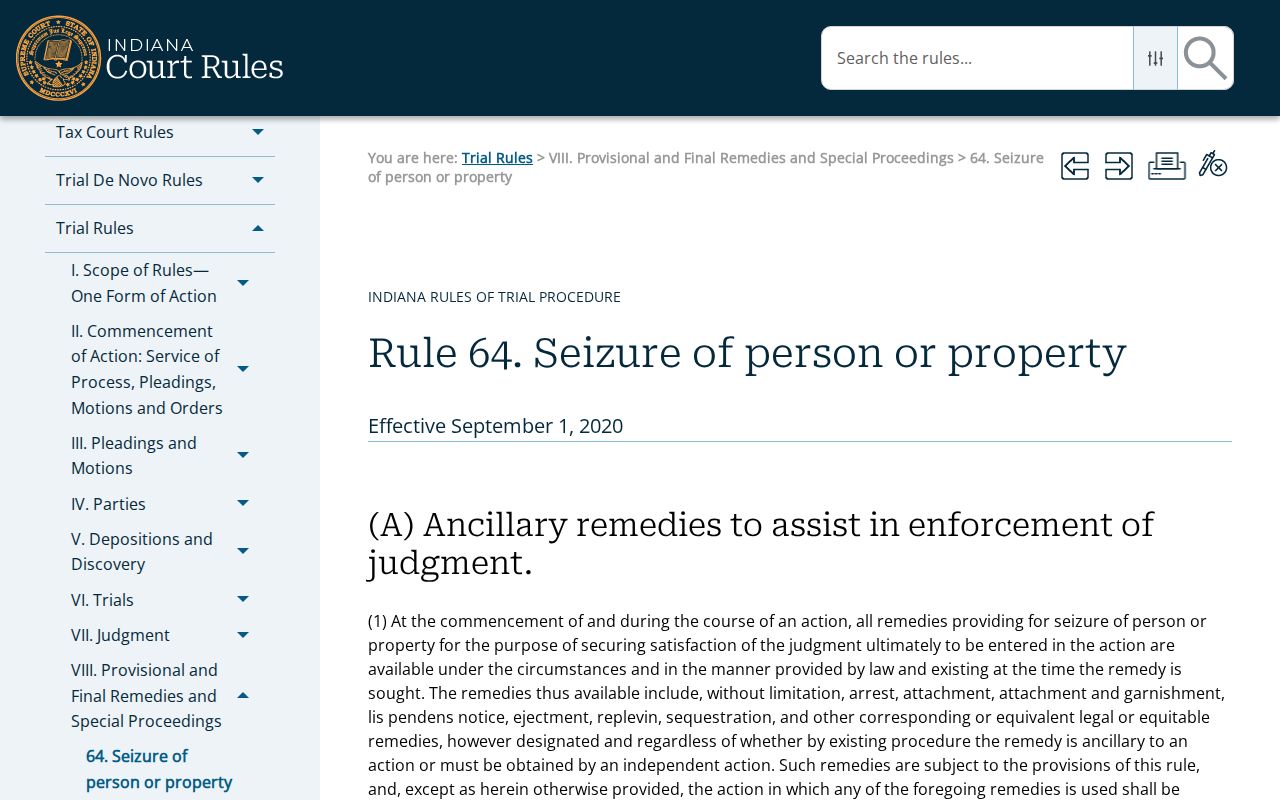
The rule confirms why a civil attachment needs its own court-based inquiry instead of a generic criminal warrant response.
Ask the Clerk for the exact cause type and order. A civil release may involve bond or escrow, while a criminal FTA can carry different local conditions. Counsel can identify the proper motion and appearance route.